Direct! Action! Protest and the Forest
Panel discussion with me talking about the threat of enclosure during the C19th, and the people who helped save the forest, including my ancestor Thomas Willingale.
On 4 May at Leytonstone Library there is a free day of events looking at the role of Direct Action and Civil Disobedience in Waltham Forest. Includes screening by Undercurrents, Free Vegan Lunch and Direct Action Training workshop. There are only 25 spaces.
https://wfculture19.co.uk/events/directaction
As part of Waltham Forest, London Borough of Culture 2019 there will be a day of screenings, discussions and workshops to investigate Waltham Forest’s rich history of community action and protest. This will include a panel discussion with Ellie Wilson tracing the efforts of Thomas Willingale in the 1800s, whose actions kickstarted the campaign that saved Epping Forest for the people of London, through to the M11 link road protests in the 1990s, documented by the revolutionary activist video group Undercurrents, and finally drawing links to similar, contemporary direct action protest movements with Resist + Renew. Following this discussion, the audience will be invited to take part in a Direct Action training workshop and the production of a new video. The finished video will be shown as part of Art Night 2019. Free and accessible to all. Refreshments will be provided by Tegan the Vegan.
To book a place visit https://wfculture19.co.uk/events/directaction

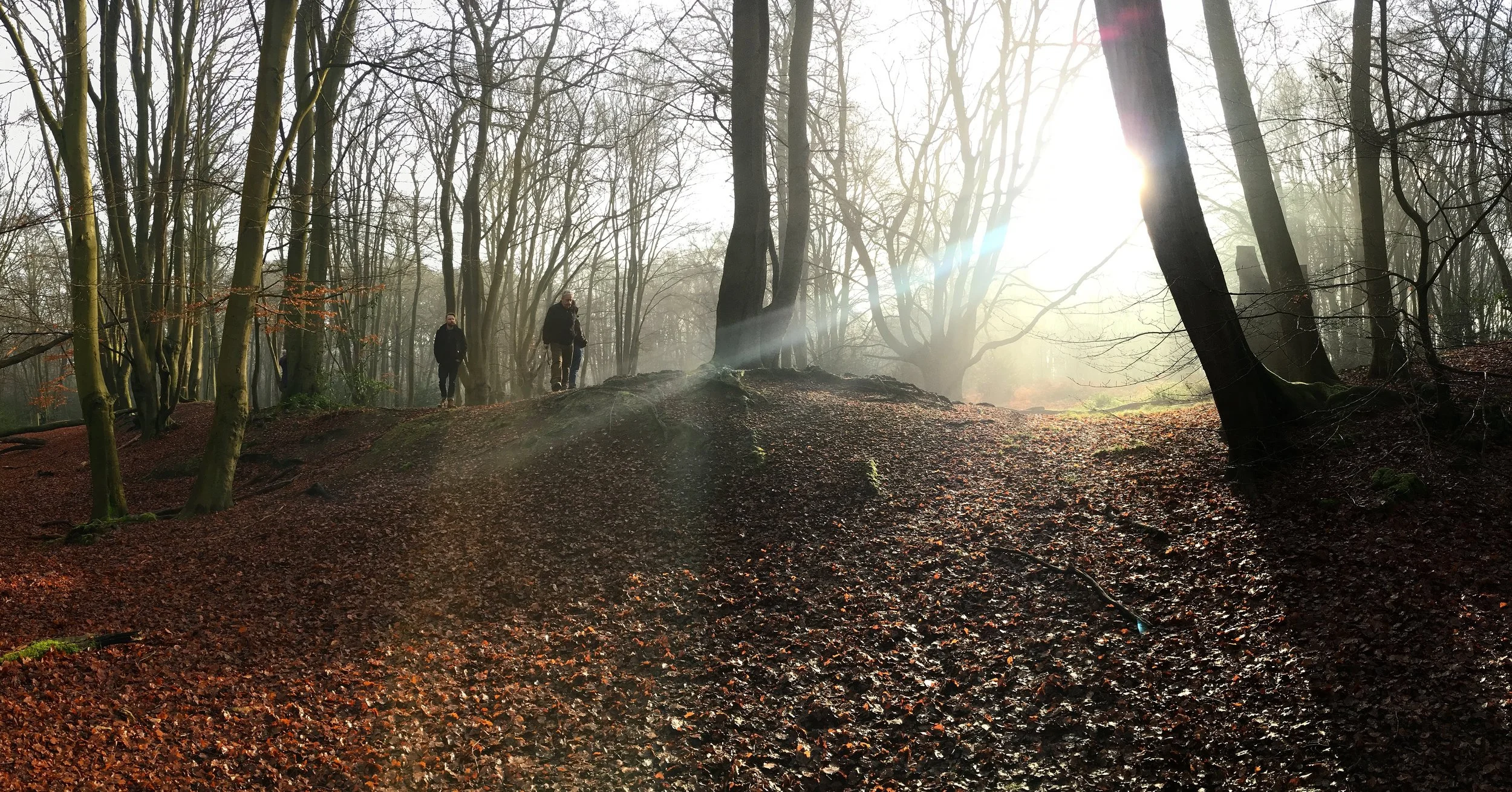
Iron Age earthworks in Epping Forest
The first in a series of blogs exploring the history of Epping Forest.
“The Past has a life in the forest. Nowhere is it easier to imagine the long pageant of history”

#1 Grimsbury Castle (Iron Age Hillfort in West Berkshire)
Loughton Camp is one of the most magical places in Epping Forest. One of two Iron Age earthworks in Epping Forest (the other, Ambresbury Banks, is situated a little further North), it is thought to have been built around 500BC and used by the neighbouring Trinovantes and Catuvellauni tribes to hold livestock and as a place of refuge. By the time Julius Caesar led the Roman invasion in 55AD, the Trinovantes were considered the most powerful Celtic tribe in Britain, teaming up with Boudica and the Iceni during the uprising against the Romans in 61AD. Although excavations have proven Romans were in the forest, the legend that Ambresbury Banks was the location of Boudica’s defeat has been dismissed by historians.
Loughton Camp is hidden off the beaten track in Great Monk Wood, on the edge of a high ridge approximately 110m above sea level. It is now densely wooded, but the 10 acre camp would have been built there as a great viewpoint. The banks would have been 3 metres high and the ditches surrounding them 3 metres deep. Image #1 shows how a hillfort built around the same time might have looked.

#2 Loughton Camp Map (drawn by BH Cowper C19th)
Fast-forward over 2000 years and Loughton Camp is also said to be where highwayman Dick Turpin had his hideout in the 1700s. Such was Turpin’s notoriety in the area that many Loughton residents built ‘Turpin Traps’, wooden flaps at the top of the stairs that wedged between floor and ceiling keeping them and their valuables safe - a sort of C18th panic room! Nowadays the forest is thick with trees right up to the edge of the roads, but back then they were kept clear to prevent robbers like Turpin from lying in wait to ambush unsuspecting carriages.

#3 Loughton Camp c1885
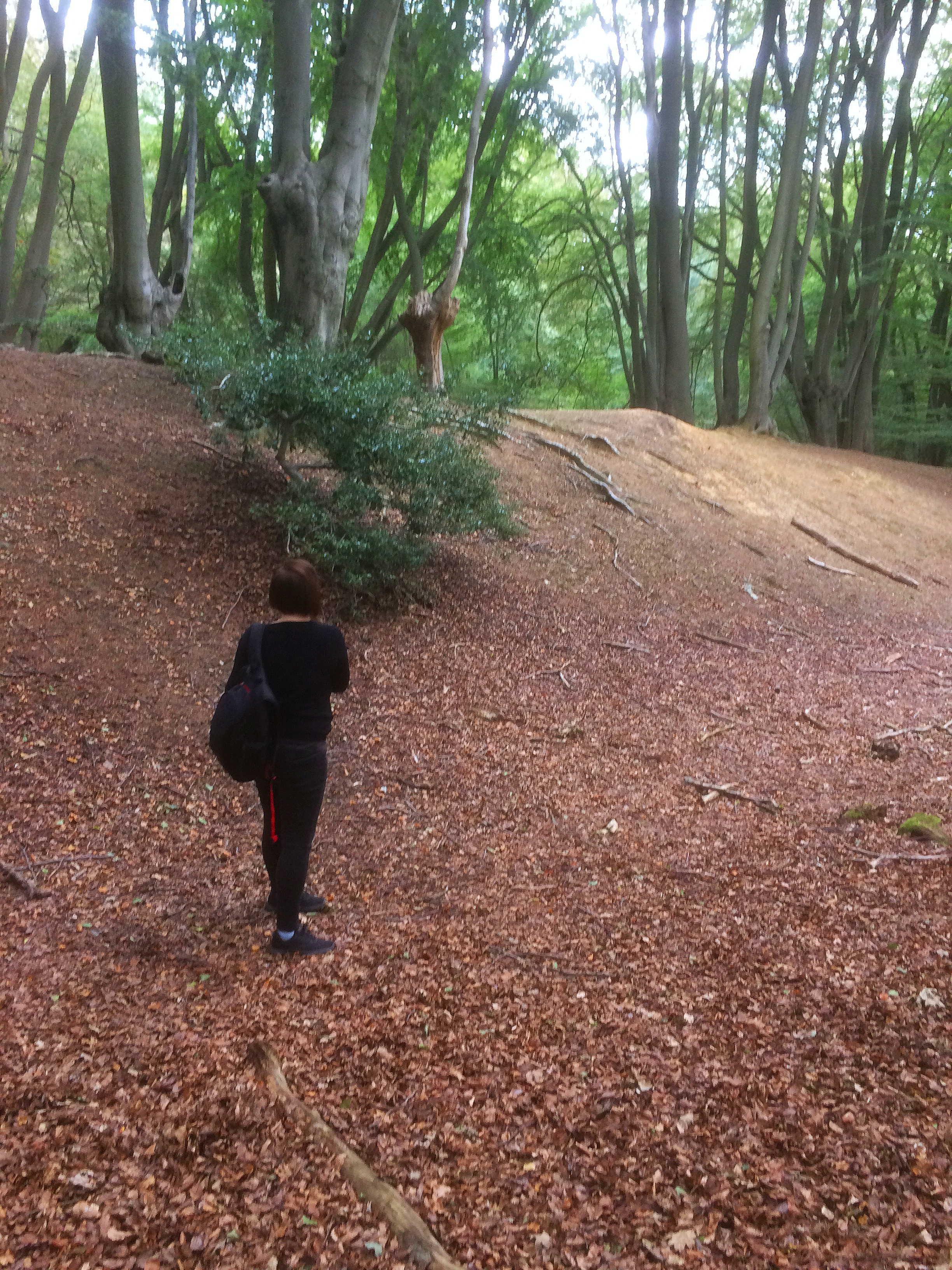
I find it fascinating to think of all the people who have stood on the site of this camp before me, their stories embedded in the spirit of the place. Even in the short period of 130 years the area has changed. See in photo #3 how open the space is, with lots of fox and rabbit burrows, versus in #4 how tall hornbeams surround the area cathedral-like today.
If you want to go and explore for yourself, here are the directions on the Epping Forest website
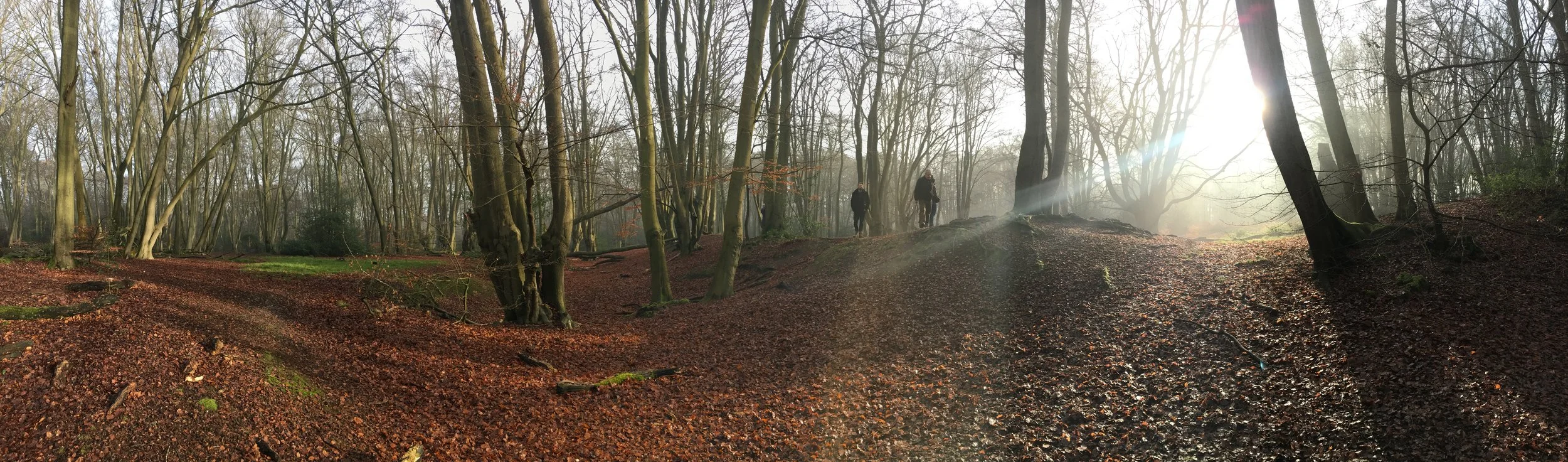
#4 Loughton Camp Dec 2018 with the family