Moth Mornings in Epping Forest
Ellie hosts two Moth Mornings with Epping Forest’s conservation team
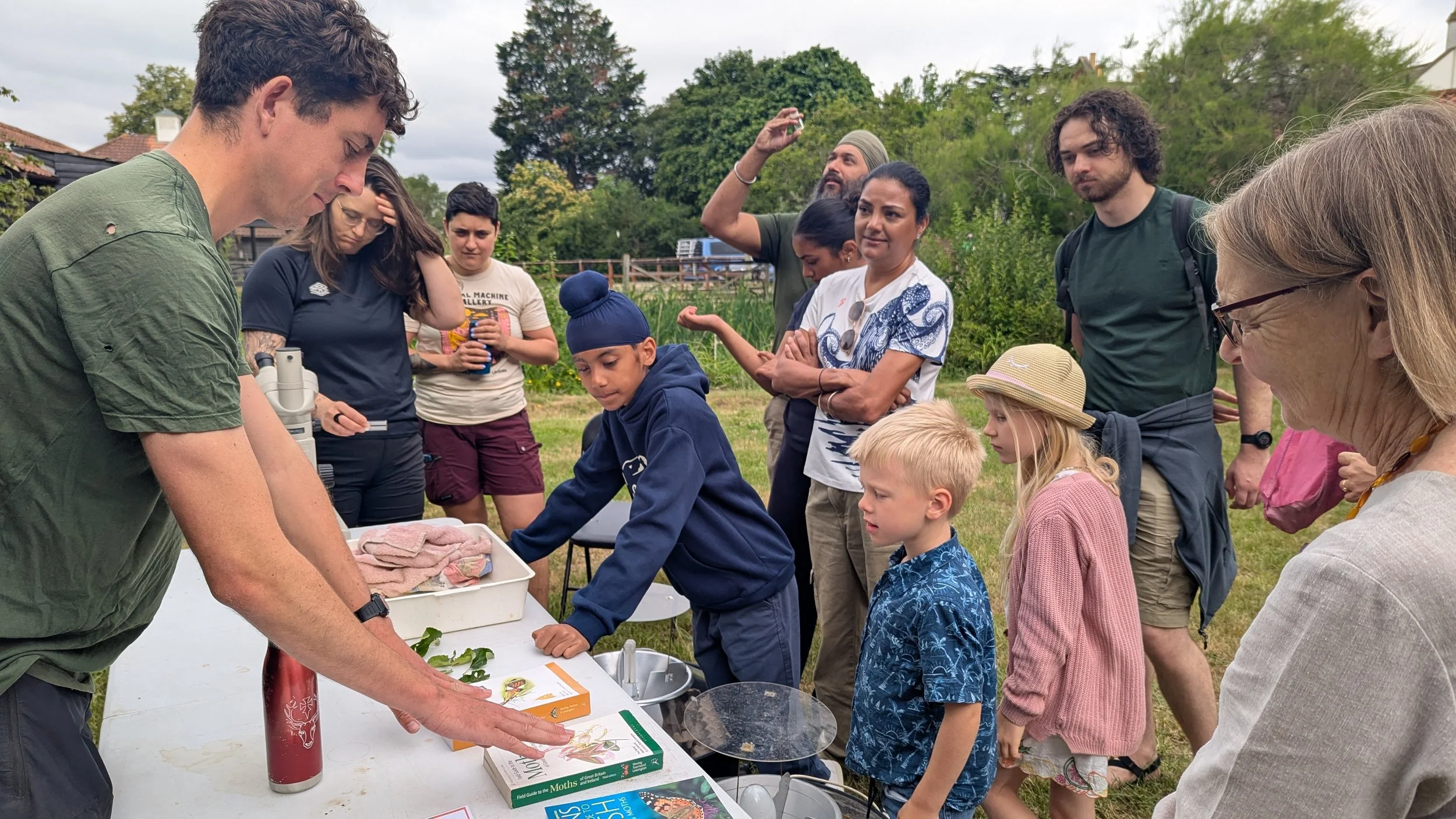
Our first two Moth Mornings in Epping Forest were a resounding success.
I was joined by Dr. Will Langdon, Epping Forest’s Assistant Conservation Officer and expert entomologist. Thanks to his vast knowledge of our nocturnal pollinators, attendees of all experience levels walked away having learned something new.
Two moth traps set up the previous evening gave everyone a chance to discover what had been flying overnight and see these incredible insects up close - we even brought along a microscope for close-ups of wing scales and feathery antennae.
The trap reveals were followed by a lively morning of crafts, music (on headphones), and great discussion.
What our attendees had to say:
“Fascinating, beautiful, and informative”
“Interesting, interactive, fun”
“I learned so much this morning... there are so many species of moths!”
Conservation moth trapping is essential for conservation to help us understand and manage our habitats and gather valuable data. Once recorded, all moths are safely released.
This event is part of Ellie Wilson's Moth x Human project, which is coming to Epping Forest in 2027.

Moth x Human Dutch Premiere
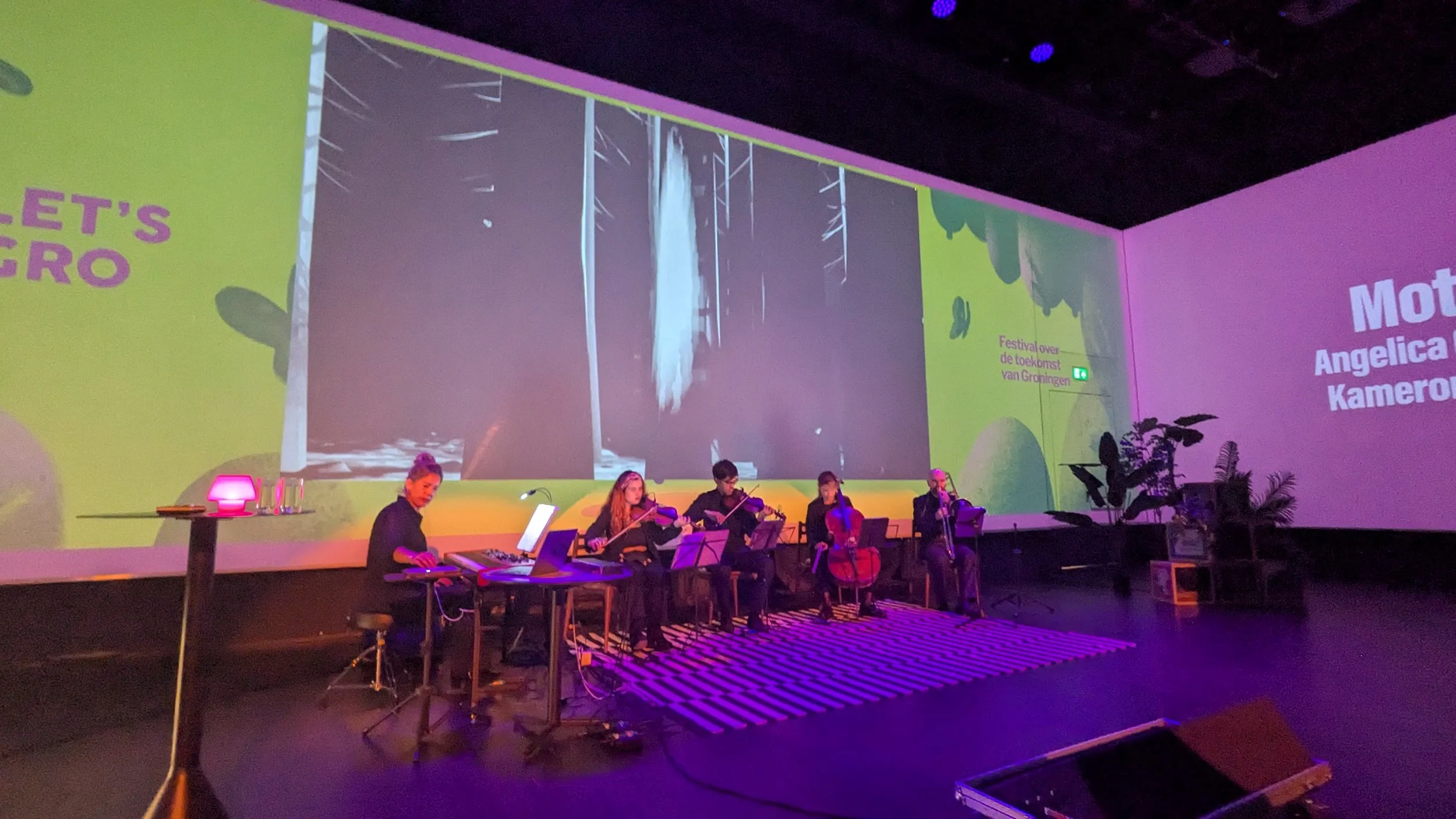
Kamerorkest van het Noorden perform Moth x Human at Groningen Forum
Photos from my lovely trip to Groningen in northern Netherlands on 8 November. 🇳🇱
A huge dank u to Kamerorkest van het Noorden for reaching out to me a few months ago to ask if they could get the score of Moth x Human to perform as part of LetsGro festival at the stunning arts centre Groningen Forum.



DIY Moth Trap
Discovering moths in my garden
A moth trap is a fascinating way to find out what kind of moths are flying about in your garden when you are asleep and it’s very easy and cheap to build one. Moth traps are designed to catch and observe moths, not to harm them, and the insects can be safely released the following day. You can also do your bit and submit your moth sightings to the National Moth Monitoring Scheme.
What do you need?

Bucket/crate with lid
egg boxes
a cylindrical bottle/pipe
inside of a lampshade, or similar (for holding bottle & LED strip)
cable ties
perspex bowl/microwave food cover (optional, for rain protection / bird deterrent)
Sharp knife for cutting hole in lid for funnel to slot into
large, shallow funnel (approx 20cm diameter) with wide hole at bottom (cut a standard funnel to size)
USB power pack
UV light (around 365nm UV) (nb. I’m using 395-405nm LED strip which is cheap and works OK but isn’t optimal for attracting moths. Visit Butterfly Conservation for alternatives

Charge your battery pack
Put some fresh foliage in the crate along with the egg boxes
At 11pm-12am put the moth trap in a sheltered area of your garden and switch the light on
6am-7am (or earlier!) come out in the garden to look at your catch! (UK Moth ID)
Gently move the moths to a shady hedge or tree to rest until dusk
NB: I am in no way an expert. There has been a lot of trial and error, plus friendly advice on Facebook groups like Moth Traps UK. There is plenty of information online about building moth traps for observation, and places where you can buy them ready to go.
A few of the moths I’ve attracted in my garden using my simple, budget-friendly set-up:


Moth trap at night
Moth x Human Bradford World Premiere
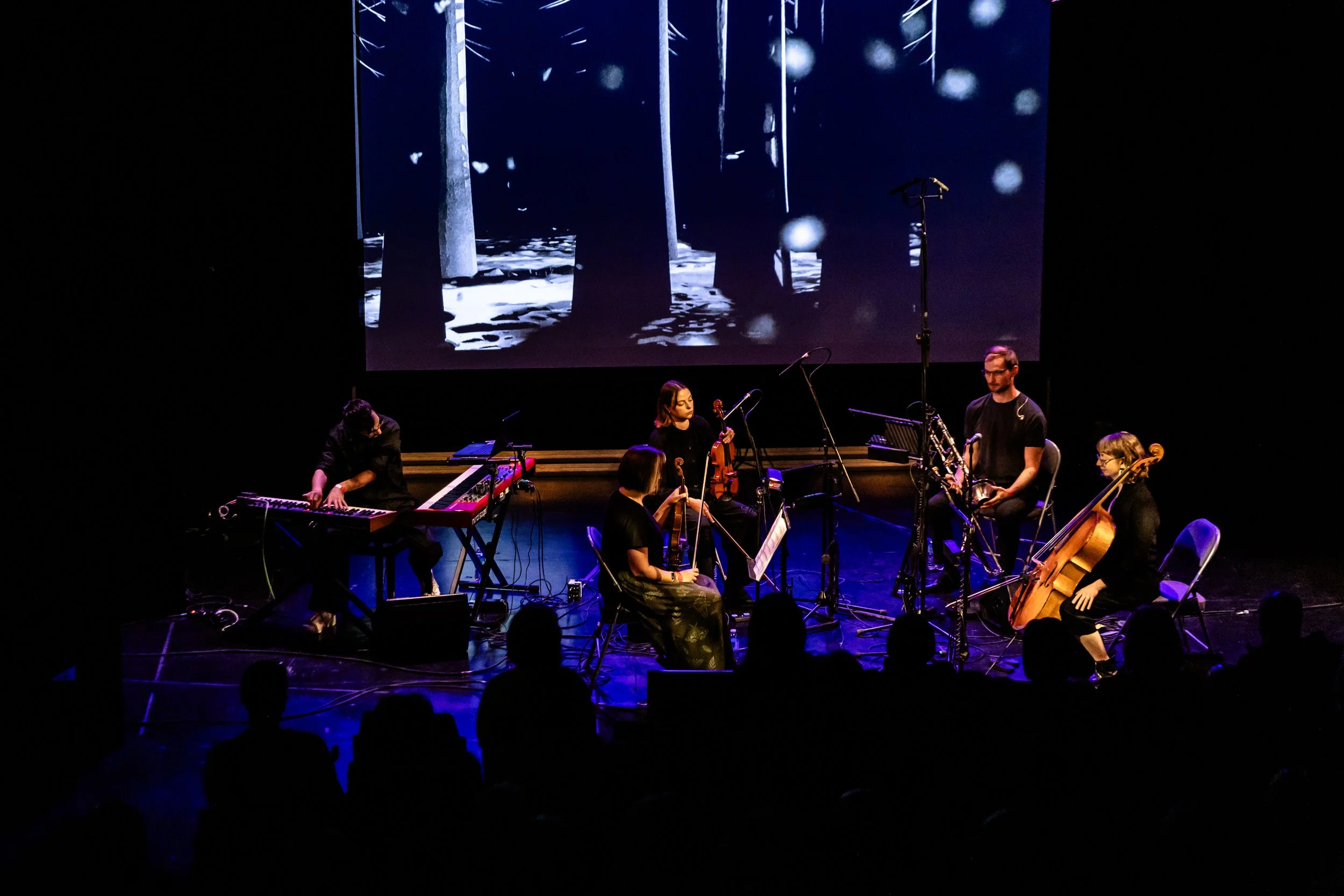
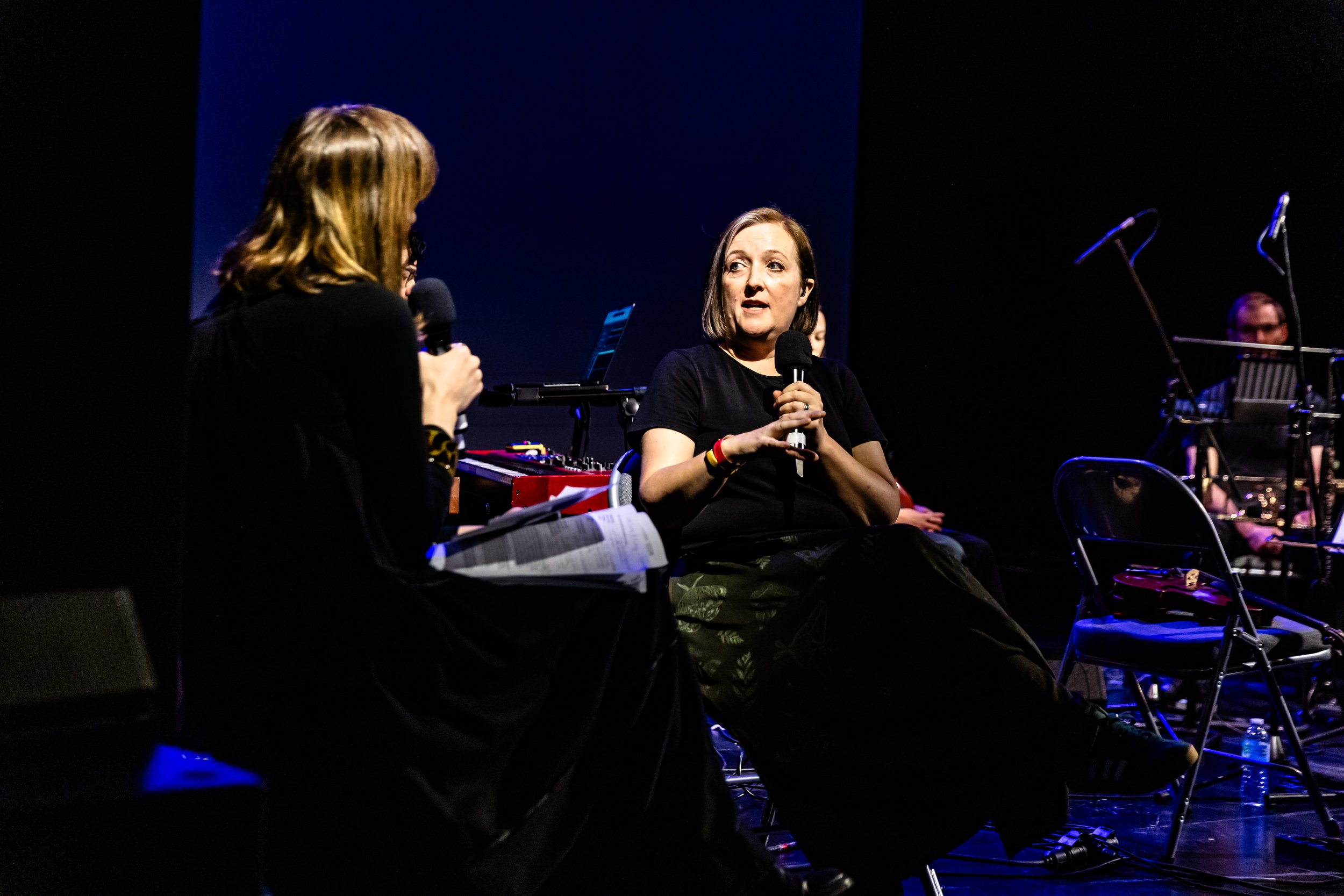
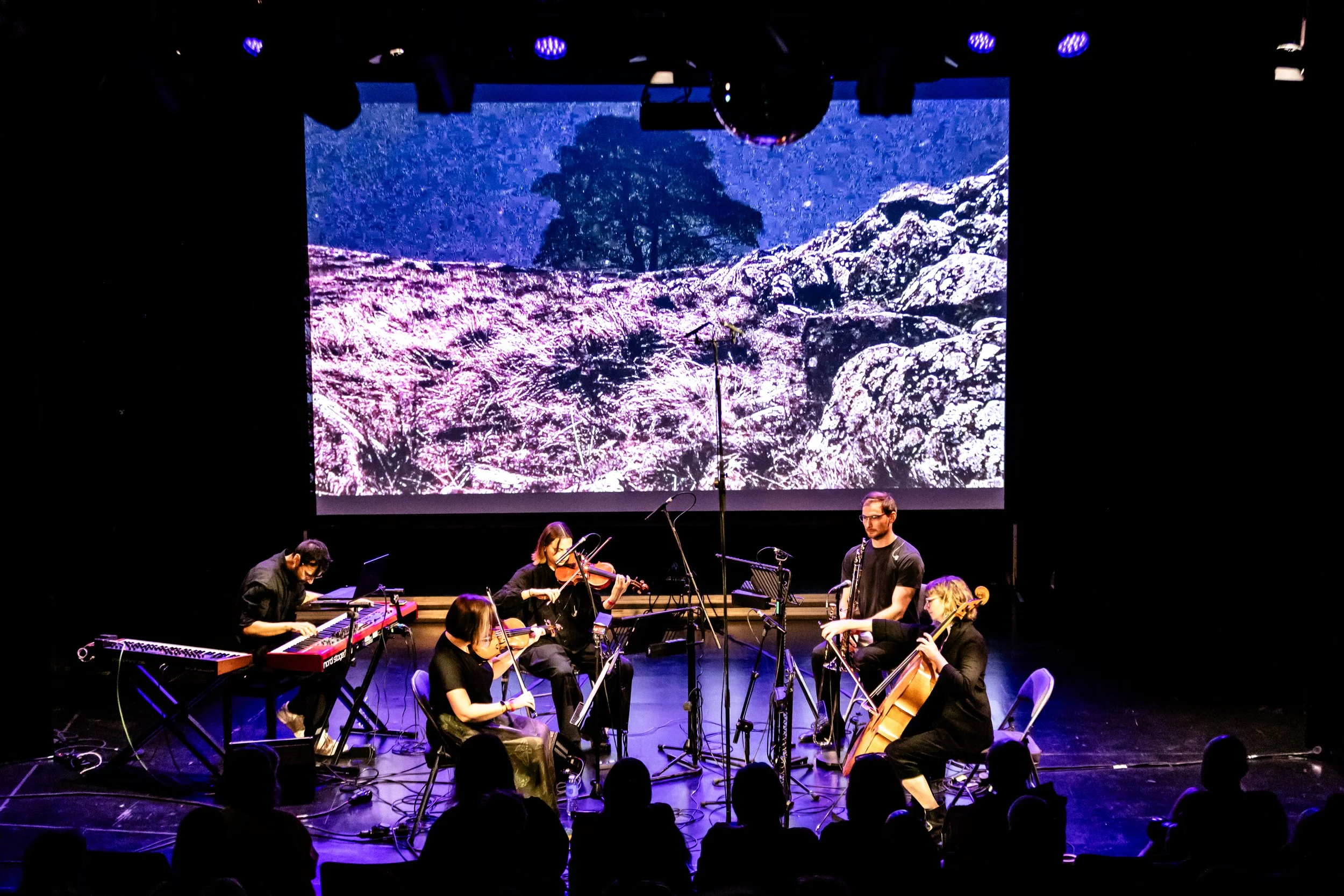
New Music Biennial premiere of Moth x Human at Bradford Loading Bay






Team Moth
Ellie Wilson violin
Freya Hicks violin
Louise McMonagle cello
Huw Evans trombone
Jay Chakravorty piano/synths
Visuals: The Northern School of Art
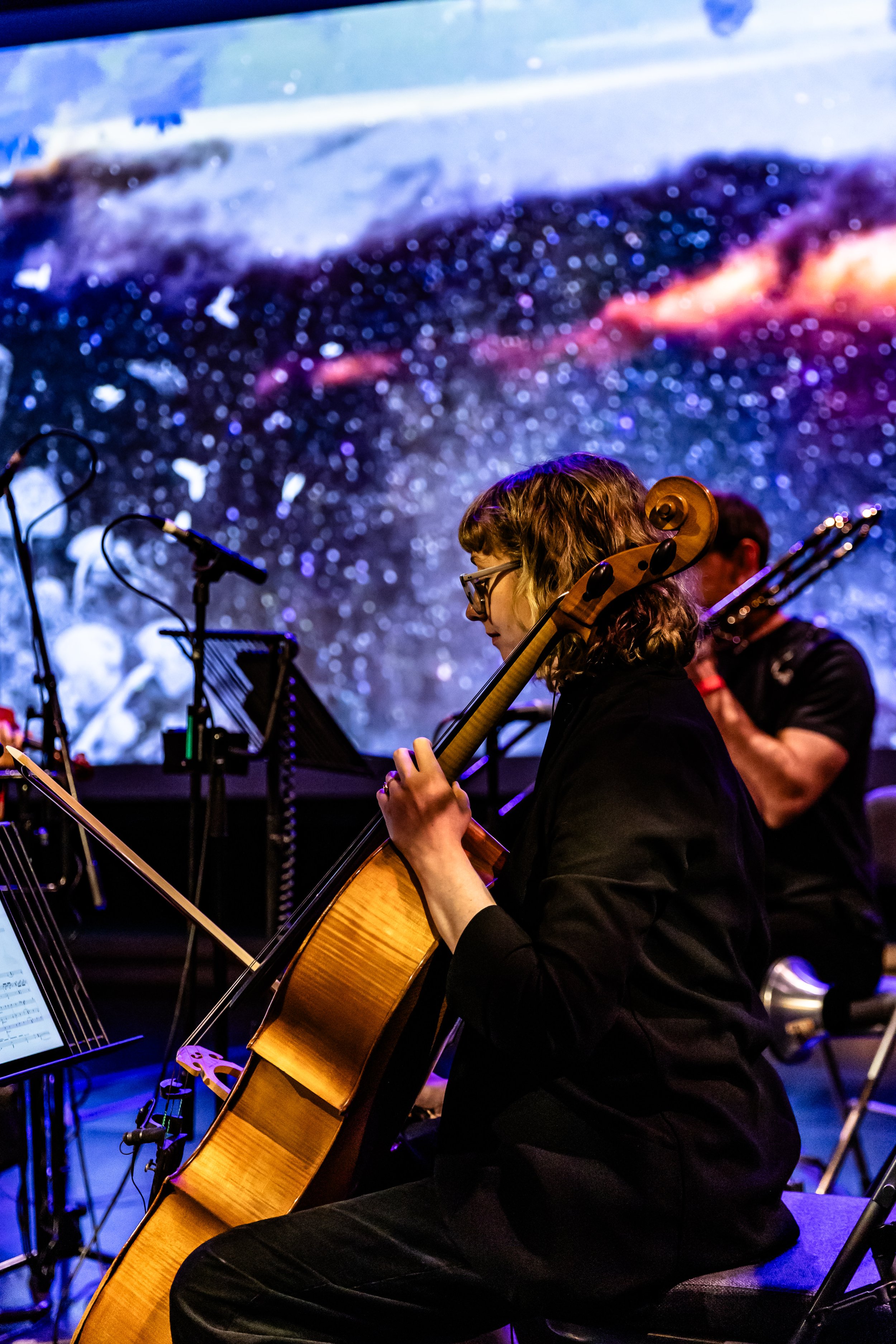
Photos: Victor Frankowski taken at New Music Biennial, Loading Bay Theatre, Bradford, Saturday 7 June 2025
interviewed by Elizabeth Alker for BBC Radio 3 New Music Show
Moth x Human is commissioned by Oxford Contemporary Music and supported by UK Centre for Ecology and Hydrology
New Music Biennial 2025 – PRS Foundation and Southbank Centre’s new music festival in partnership with Bradford 2025 UK City of Culture and BBC Radio 3 and NMC Recordings.

Moth x Human Trailer
Film created by students from The Northern School of Art, Visual Arts Faculty
A huge thank you to senior lecturer Matthew Burton and students at The Northern School or Art, Visual Arts Faculty, particularly BA (Hons) Animation and BA (Hons) Photography for creating the Moth x Human live visuals.
So many beautiful designs. Here are a few of my favourites …


A celebration of moths
Declining biodiversity and facts about moths
Have you seen a beautiful Elephant Hawk Moth, a Burnished Brass or a Ruby Tiger? Nocturnal pollinators can be so easily overlooked because they are active when we are asleep, yet they play an essential role within our ecosystem and are as important as bees and butterflies. Their numbers have dropped significantly – by 28% since 1968, and by 40% in southern Britain – impacting wildlife that rely on them for food, such as birds, bats, and small mammals. Decline is a result of habitat loss from agriculture, urbanisation, light pollution and climate change, which also shifts species distributions and lifecycles.


Moth Facts
Moths have been around since the start of the Jurassic period, more than 190m years ago
The first butterflies evolved from moths at least 50m years ago
Today there are around 2500 species of moth in the UK but only 59 species of butterfly
A group of moths is called an eclipse
Some of the 80 species of moth that appear in the data used for Moth x Human.
Ruby Tiger I Brimstone I Poplar Hawk I Common Carpet I Central Barrred Sallow I Muslin Footman I Rosy Footman I July Highflyer I Elephant Hawk I Burnished Brass I Small Magpie I Common Footman I Lesser Yellow Underwing I Dusky Sallow I Large Yellow Underwing I Flounced Chestnut I Antler Moth
Find out more about my new piece Moth x Human here
Further reading
Discover how you can create a moon meadow at home and in your local area and help our nighttime pollinators thrive. Free download leaflet

Telling data stories through sound
The data sonification process.
When I first came up with the idea for Moth x Human I don’t think I realised quite how much time would be spent staring at spreadsheets before I could actually start making music.
The idea came to me one day at the breakfast table - to create a piece of music that explores declining biodiversity using insect activity. I was soon introduced to the biodiversity scientists at UKCEH who had recently built a solar-powered device for monitoring nocturnal insects.

AMI System
Each AMI system (Automated Monitoring of Insects) is set up to work automatically (no sitting outdoors with a flask and clipboard at midnight!) and features a light for attracting insects, along with high resolution cameras that can capture images of moths and classify them by species using AI. Over several months, they build a good picture of what biodiversity is like in different locations. The results are collected in a spreadsheet giving a timestamp and classification to each moth that lands.
Having looked at months of data from six different UK locations I selected:
1 August 2024 Parsonage Downs, Salisbury
A protected area and healthy habitat. Some of the best chalk grassland in the UK.
80 different moth species over a 4-hour period (midnight – 4am).
Audio recording from this night is buzzing with insect noise.
There was heightened activity in the early hours of 1 August, following a humid day at the end of a heatwave. I assume the hot weather had encouraged more moths to emerge from cocoons.
Telling data stories through sound
The Parsonage data was analysed in Excel to spot trends - how many times a certain species appeared and at what points during the night. The prepped data was then fed into a bespoke Max/MSP device and converted into MIDI, with each species of moth assigned a unique sound or note. I gave some of the more prominent sounds I’d created to my ‘showstopper’ moths; species such as the beautiful Elephant Hawk-moth and Burnished Brass.


And then a leap of faith - what happens when I press play?
Ellie talks through the process of uploading moth data via a bespoke Max/MSP device then assigning sounds via MIDI.
The ‘performance’ captures the ebb and flow of different species’ activity throughout the night. Four hours is condensed into almost 5 minutes (Part I of Moth x Human). At some points the moths create short melodic fragments and these can be heard later in the piece as repeating motifs in the cello and piano.
As a contrast, the end of the piece uses data from a poor habitat, audibly demonstrating declining biodiversity due to human interference.
1 August 2024 UK Farmland
Monoculture farm using pesticides
19 different moth species over a 4-hour period (midnight – 4am).
Audio recording from this night is eerily silent.
About Moth x Human
Moth x Human is an immersive audio-visual composition which combines cutting edge musical technologies and ecological research to highlight biodiversity through art. The piece will be presented for the first time at the two PRSF New Music Biennial events at the Southbank Centre, London, and in Bradford as part of its UK City of Culture celebrations.
At the heart of Moth X Human is Ellie’s musical response to the collection of sonic night-data from diverse species of moths from UK nature sites. The work, which inspires a sense of the wonder of nature, highlights the importance of a natural world that comes alive after dark.
The piece is written for 2 violins, cello, trombone, piano, synths, electronics … and moths.
For more info visit:
https://ocmevents.org/project/new-music-biennial/
https://www.ceh.ac.uk/solutions/equipment/automated-monitoring-insects-trap

New Music Biennial
New commission exploring moth biodiversity selected as part of PRSF’s New Music Biennial
I’m delighted that my new work Moth X Human has been selected for PRSF New Music Biennial 2025. Environmental and biodiversity issues are something I’m passionate about and this piece will highlight the impact that habitat loss, climate change and light pollution has on our nocturnal pollinators.
In collaboration with biodiversity scientists at the Centre for Ecology and Hydrology, my piece explores the positive use of AI for conservation. Part data sonification, part notated composition, the work is an interspecies dialogue. Alongside a small ensemble and electronics, moth activity data collected from UK locations is used to generate and manipulate sounds.
Dr Jenna Lawson of UKCEH, said:
“At a time of rapid biodiversity loss and climate change, it is essential that we understand and appreciate the value of nature and the consequences of habitat loss and destruction. The data we collect as scientists highlights both the remarkable diversity of nature and consequences of its loss, however the challenge often lies in presenting this information in an interesting and informative way.
“This project will showcase the wonder of nature through music, specifically focusing on moths and the natural world that comes awake while we sleep. These fascinating creatures are essential for our ecosystems, pollinating many flowers, trees and crops during the night, but are underappreciated. We hope Ellie’s interpretation of our scientific data through a musical composition will show people the remarkable night-time biodiversity of the UK.”
The piece will be performed at the two festival weekends:
6-8 June 2025 Bradford City of Culture
4-6 July South Bank Centre
Broadcast on BBC Radio 3 and released on NMC Recordings.
Commissioned by Oxford Contemporary Music
Supported by UK Centre for Ecology and Hydrology (UKCEH)


Podcast: Eavesdropping Festival preview
Podcast: chatting to Juliet Fraser (Eavesdropping) about violins, influences, musical genres, layers of history & moths

Hear me chat to Eavesdropping curator Juliet Fraser about my chance encounter with a violin at school, finding my own soundworld, exploring layers of history, musical genres and moths.
PODCAST (13mins): on.soundcloud.com/L8VcM
I will be performing works from my latest album Memory Islands at Cafe Oto Dalston, on Friday 22 March as part of the excellent Eavesdropping Festival.
GIG: tickets can be purchased at www.cafeoto.co.uk/events/eavesdropping-festival-2024-2/
Here's a tiny preview of what i'll be performing. There will be violin, hardanger fiddle, drones, glitches, improv, field recordings and the voice of my grandad.
PREVIEW (INSTAGRAM): tinyurl.com/2m5ee7wr